











Last updated: 23 April 2026 · The first day of school in Germany takes place between mid-August and early September 2026, depending on the federal state. Individual dates are usually published by schools 4–6 weeks in advance.
The first day of school is a special moment – for your child and for you. From choosing the school bag to the school cone and the celebration itself, there's a lot to prepare. With our step-by-step guide, you can approach the start of school 2026 with confidence and turn this big day into an unforgettable experience.
Your roadmap to the first day of school
Good preparation doesn't start in the holiday week right before school begins. This timeline shows you when to tackle what:
The 6 phases of starting school
From the first planning steps to the first weeks of school – stress-free, step by step.
Start planning
Ask the school for the start date, pencil in holiday days in your calendar, and draft a guest list for the celebration. Start researching school bags – many parents begin shopping as early as spring.
Buy the school bag
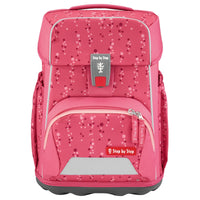
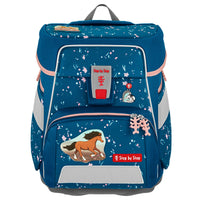
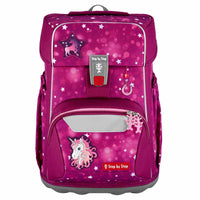
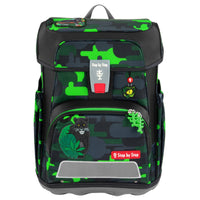
The most important purchase. Have your child try on different models – packed, not empty. More on buying criteria and brands can be found further below in the guide section.
Prepare the school cone
Get a blank school cone and decoration materials (or buy a ready-made one). Craft it together with your child – this builds excitement. Content ideas further below.
Organise the celebration
Send out invitations, sort out the venue/catering, and get decorations. Keep the guest list manageable – the first day of school is usually in the morning, with the celebration right after.
Celebrate the big day
Get the school bag ready, hand over the school cone, take photos. It's an emotional day – show your child how proud you are. Take a short break after the school event before your own party.
Support the settling-in period
Short school days at first, then the full timetable. Establish a homework routine, pack varied lunchboxes, and listen every day. If unsure, talk to the teacher.
The first-day-of-school checklist at a glance
Organise yourself into three categories: what your child needs (school equipment), what goes into the school cone, and what's needed for the celebration.
School equipment
- School bag with lunchbox compartment
- Filled pencil case
- Gym bag with sports gear
- Indoor shoes for the classroom
- Rain jacket & hat
- Lunchbox + water bottle
- Reflectors & safety vest
School cone contents
- Sweets (in moderation)
- A book or audio story
- Small toy
- Lunchbox
- Water bottle
- Eraser & pencil sharpener
- Name stickers for notebooks
For the celebration
- Invitations 4 weeks in advance
- Camera/smartphone charged
- Cake or catering
- Decorations in favourite colours
- Games for other children
- Gift idea for friends
- Set up a photo corner
School bags for first grade – the buying guide
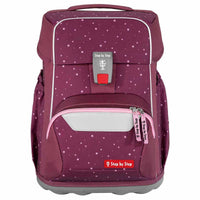
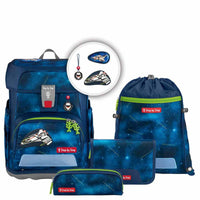
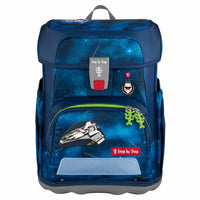
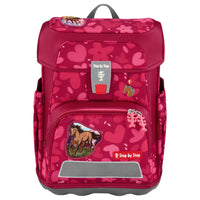
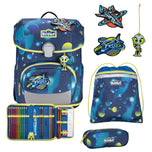
The school bag is the most important gift for the first day of school. It will accompany your child for the next 4 years on the way to school, and above all it needs to be ergonomic, safe and practical for everyday use. Here are the 6 most important buying criteria for parents of first-graders.
The 6 buying criteria for the first school bag
1. DIN standard 58124
A mandatory standard in Germany. At least 20% fluorescent surface area plus 10% reflective strips for visibility at dusk.
2. Empty weight
Maximum 1.3 kg. When packed, the bag shouldn't weigh more than 10–12% of the child's body weight – for a 25 kg child, that's 2.5–3 kg.
3. Ergonomics
Padded shoulder straps, hip belt, adjustable back system. The bag should rest on the back, not on the bottom.
4. Height adjustment
Special "flex" systems are available for first-graders (110–125 cm in height). The bag can grow with the child for 3–4 years.
5. Volume & compartments
18–22 L is enough. Main compartment for books, secondary compartment for pencil cases, a lunchbox compartment, and side pockets for water bottles.
6. Motif & design
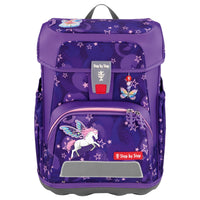
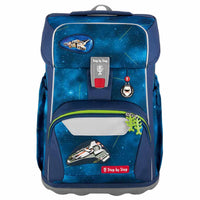
Your child should have a say – after all, they'll need to love the bag for 4 years. Interchangeable magnetic motifs offer flexibility if their taste changes.
The most important brands for first-graders
Ergobag
Scandinavian design, very lightweight. Interchangeable magnetic motifs.
Step by Step
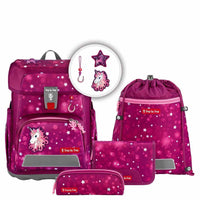
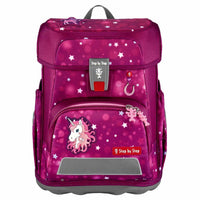
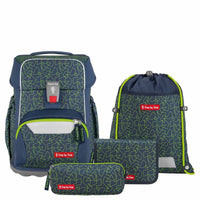
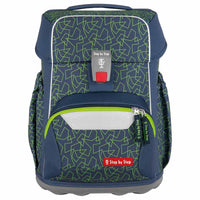
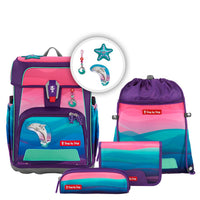
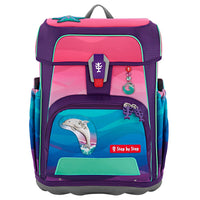
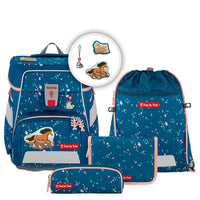
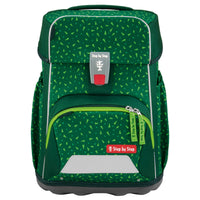
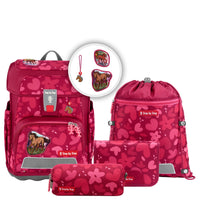
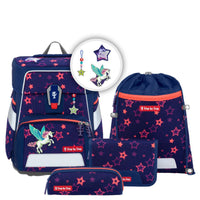
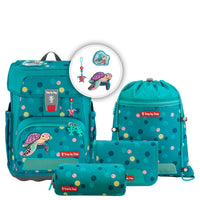
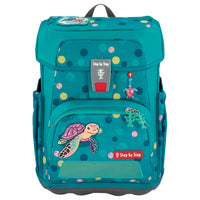
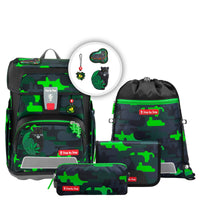
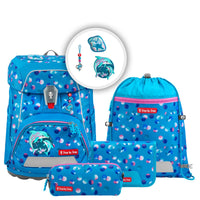
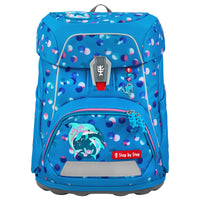
A German classic, known for sturdy construction and a wide range of motifs. Also available as combo sets.
Scout
A reliable brand with classic design. Durable bags, often a favourite among German parents.
Coocazoo
A carrying system that grows with your child from 1st to 10th grade. Cool design, popular among children and teenagers.
DerDieDas
Ergonomics specialist. The ErgoFlex model is particularly light and popular among parents.
Lässig / Satch
Satch from 3rd grade onwards, Lässig for first-graders. Focus on design.
Important when buying: Have your child try on the bag before buying. A packed bag feels different from an empty one. For most school bags in our shop you'll find detailed dimensions and weight specifications.
How much does a good school bag cost?
- Entry-level (€100–160): solid quality, usually without accessories
- Mid-range (€160–240): set with pencil case, gym bag, rain cover
- Premium (€240–300): top-tier ergonomics, materials, exclusive motifs
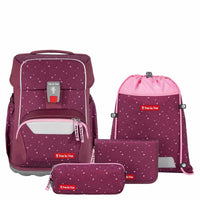
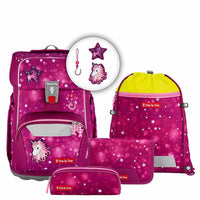
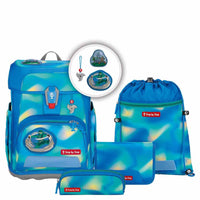
The most commonly purchased sets include 3–5 pieces: school bag, pencil case, pen pouch, gym bag, and a pencil box.
The school cone – filling the classic treat correctly
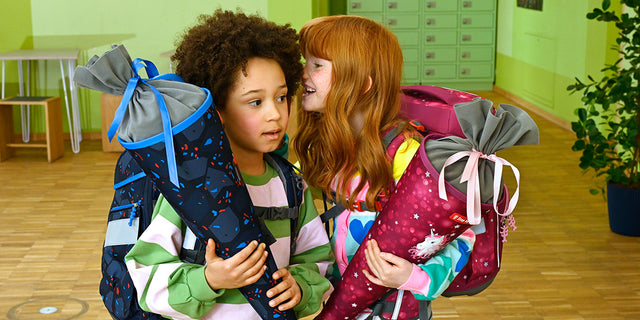
The school cone is a gift with over 200 years of tradition in Germany. Ideally, it's not just filled with sweets but also reflects your child's personality. Tried-and-tested contents:
- Sweets: A moderate amount, ideally organic or tooth-friendly
- Book or audio story: matching their interests – dinosaurs, horses, space
- Small toy: a cuddly toy for the bag, a keyring
- Lunchbox and water bottle: engraved with their name is a nice touch
- First writing utensils: pencil sharpener, eraser, ruler, coloured pencils
- Name stickers: for notebooks, pens and clothing
- Voucher: e.g. for an outing with mum or dad
Tip: Don't stuff the school cone completely full – the wrapping paper rustles more nicely if there's still some air inside. It's better to give important gifts separately at the celebration.
Planning the celebration
The celebration should remain stress-free – for the whole family. Three practical tips:
- Keep it small: 10–15 guests are enough. Immediate family, close friends, godparents. Too many guests can overwhelm first-graders
- Plan the timing: School event in the morning, celebration in the early afternoon, with a short break in between. Children get tired in the afternoon
- Keep the food simple: Cake and coffee are enough. Finger food and fruit skewers for the kids. No need for a 5-course meal
The emotional side – for parents and children
Starting school isn't just an organisational project, it's also an emotional milestone. Your child is stepping into the "big wide world" – and you become the parent of a school child. Tips for the emotional side:
- Take the nerves seriously: Stomach aches, poor sleep or tears are normal. Calm and patience help
- Create routines: Adjust bedtime 4 weeks before school starts, practise breakfast routines
- Build excitement: Walk the route to school together, show them the school, meet the teacher in person if possible
- Allow your own feelings: "My baby is growing up" – it's okay to feel that, even cry. Take lots of photos, you'll treasure them later
The first weeks of school
After the first day, everyday life begins – for you and your child. Important in the first few weeks:
- Short school days: Usually only 3–4 hours at first. Lunch at home
- Homework routine: A fixed spot, a fixed time. 15–30 minutes is enough at first
- Varied lunchboxes: Wholegrain, fruit, vegetables, nuts – energy for concentration
- Listen daily: How was your day? What did you learn? What was fun?
- In case of problems: Speak to the teacher early on. Take bullying, being overwhelmed, or boredom seriously
Frequently asked questions about starting school
When does school start in 2026?
In Germany, between mid-August and early September, depending on the federal state. Schools usually know the exact dates from May/June 2026.
When should I buy the school bag?
From spring (March–May) is ideal – that's when the widest range of models is available. Many retailers hold school bag events with personal advice. The bag should be at home by July at the latest.
How much does a good school bag cost in 2026?
Entry-level from €100, mid-range €160–240 (usually with an accessory set), premium €240–300. Given 4 years of use, investing in quality pays off.
What should go in the school cone?
Moderate sweets, a book, a small toy, writing utensils (pencil sharpener, eraser, coloured pencils), lunchbox, water bottle, name stickers. Don't stuff it too full – it's better to give gifts separately.
How big should the celebration be?
10–15 guests are enough. Just the closest family and friends. The celebration should be in the early afternoon so children don't get overtired. Simple food (cake, finger food) is better than an elaborate meal.
How can I prepare my child for starting school?
Walk the route to school together, visit the school, and meet the teacher in person if possible. Adjust bedtime 4 weeks in advance. Practise breakfast and getting dressed routines. Build excitement with books about school.