












The figures given refer to the current model generations. The collections are regularly revised – check the specific product page before buying.
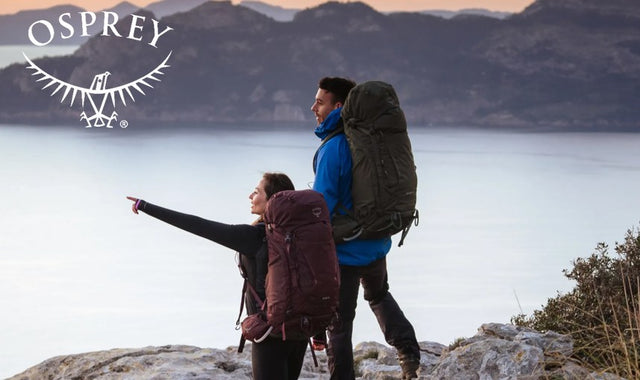
The Osprey Kestrel and its female counterpart Osprey Kyte are the hiking and trekking all-rounders in the Osprey range. Unlike the Farpoint/Fairview (classic travel-backpack opening), the Kestrel and Kyte are top-loaders with outdoor DNA – ideal for day hikes, hut-to-hut tours and multi-day trips. This guide shows you the sizes, features and who the model suits best.
Kestrel and Kyte – the two versions
Kestrel
- For heights of 170–195 cm
- Back length M/L = adjustable 43–53 cm
- Straight hip fin
- Wider shoulder straps
- Colours: Green, Black, Grey-Blue
Kyte
- For heights of 155–180 cm
- Back length XS/S = adjustable 38–48 cm
- Curved hip fin shaped for women's hips
- S-shaped, narrower shoulder straps
- Colours: Purple, Turquoise, Grey, Blue
The 4 sizes: 38/48/58/68 litres
The ideal companion for day hikes and short weekend trips.
The most popular size: enough for 2–3 days of hut-to-hut hiking.
Hut-to-hut hiking with a sleeping bag, or travel with more luggage.
Long-term tours with tent, sleeping bag and multi-day supplies.
Tip: Choosing between 38 and 48 L often proves tricky. Rule of thumb: with the 38 L you need to pack more carefully, while the 48 L forgives more packing mistakes. If you often hike with a rain jacket, spare jacket and stove, go for the 48 L.
Kestrel or Kyte – the key features
AirScape back panel
Perforated back panel provides air circulation – less sweating in warm conditions.
LightWire frame
Lightweight aluminium frame transfers load onto the hips. Ideal with a load of 10–20 kg.
Integrated rain cover
Rain cover integrated into the bottom compartment – ready in seconds when showers hit on the trail.
Hydraulic system
Hydration bladder compartment (3 L) with hose port – drink on the move without stopping.
StowOnTheGo loops
Two loops for an ice axe or trekking poles – also suitable for glacier tours.
Top-loader + front zip
Accessible from the top and the front – quick access to your gear without unpacking everything.
Technical details: Kestrel / Kyte 48
| Feature | Kestrel 48 (Men's) | Kyte 48 (Women's) |
|---|---|---|
| Volume | 48 litres | 48 litres |
| Weight | ~1.9 kg | ~1.8 kg |
| Back length | M/L (43–53 cm) | XS/S (38–48 cm) |
| Max. load | 20 kg | 18 kg |
| Hip fin | anatomical, adjustable | women-specific |
| Rain cover | included | included |
| Hydration system | 3 L ready | 3 L ready |
Kestrel/Kyte vs. Farpoint/Fairview – the difference
Many people wonder: which model suits me best? The two Osprey series are designed for different purposes:
- Kestrel / Kyte: Outdoor and trekking focused. Top-loader with StowOnTheGo loops, AirScape back panel, rain cover. Ideal for hiking.
- Farpoint / Fairview: Travel focused. Suitcase-style opening, airline carry-on dimensions, more suited to backpackers.
Rule of thumb: Do you hike more than you travel? Choose Kestrel/Kyte. Do you travel by plane and bus and only hike occasionally? Choose Farpoint/Fairview.
Who is the Kestrel / Kyte suited for?
- Weekend hikers: Kestrel 38 or 48
- Hut-to-hut hikers in the Alps: Kestrel 48 or 58 with hydration system
- Long-distance hikers (Camino de Santiago, E5): Kestrel 58 or 68
- Trekking with a tent: Kestrel 68
- Via ferrata with gear: Kestrel 48 with helmet attachment
For shorter trips (day hikes) the lighter Osprey Talon / Tempest is the better choice. For a travel focus, go for the Farpoint/Fairview.
Care tips for Kestrel and Kyte
- After rain: let it dry completely (don't put it straight into the cupboard)
- After sweating: wipe the back panel with a damp cloth
- Cleaning: use lukewarm water and mild soap – no abrasive powder
- Storage: best hung up (for smaller models) or laid flat, never compressed
- Zips: treat occasionally with silicone spray
Frequently asked questions about Kestrel and Kyte
What is the difference between Kestrel and Kyte?
Kestrel is the men's model (longer back length, straight hip fin), while Kyte is the women's model (shorter back length, curved women-specific hip fin, S-shaped shoulder straps). Features and equipment are identical.
Which size is right for the Kestrel/Kyte?
Day hike: 38 L. Weekend/hut-to-hut hiking: 48 L (bestseller). Multi-day tour with a sleeping bag: 58 L. Trekking with a tent: 68 L. When in doubt, go for the 48 L – it forgives packing mistakes better.
Is the Kestrel/Kyte suitable as carry-on luggage?
The Kestrel/Kyte 38 is borderline carry-on suitable with the right dimensions. Better as carry-on: the flatter Farpoint/Fairview 40. The 48/58/68 does not comply with carry-on regulations.
What's the difference between Kestrel and the Osprey Atmos/Aether?
Kestrel is the all-round model (trekking + hiking + day trips). Atmos and Aether are optimised more for expedition-style long tours – heavier and with a more complex carrying system. For 90% of outdoor fans, the Kestrel is the better choice.
What is the AirScape back panel?
A perforated, padded back panel that allows air to circulate between your back and the pack. You sweat less in warm weather – the backpack doesn't "stick" to your back.
Which brand is best for hiking?
Osprey leads the way when it comes to carrying systems. Deuter has a long tradition among German hikers and is often a bit more affordable. Fjällräven (Kajka) and Jack Wolfskin are good alternatives. For everyday hikers, the Kestrel/Kyte is a safe choice.
How long does a Kestrel / Kyte last?
With normal use and good care, 10+ years.
Conclusion: Kestrel and Kyte – the all-rounder for outdoor fans
The Osprey Kestrel (men's) and Kyte (women's) are the all-round hiking backpacks for anyone who does more than just day hikes. The key recommendations:
- Day hike: Kestrel / Kyte 38
- Weekend trip / hut-to-hut hiking: Kestrel / Kyte 48 (bestseller)
- Multi-day trek: Kestrel / Kyte 58
- Trekking with a tent: Kestrel / Kyte 68
You'll find the full Osprey range in the Osprey category. More helpful articles: Farpoint & Fairview Guide, Osprey Talon & Tempest, Backpack Types at a Glance.